What is worth knowing about wisdom teeth
Wisdom teeth are typically the last of our permanent teeth to erupt. Their appearance is expected around the age of 18-25, but they can cause trouble much earlier.
Instead of wisdom, they tend to complicate our days with complaints: they often do not fit in the jaw, erupt crooked or not at all, press on the neighbouring tooth or simply cause pain. With a problematic wisdom tooth it is worth seeing a dentist in time, sparing yourself many sleepless nights and much discomfort.
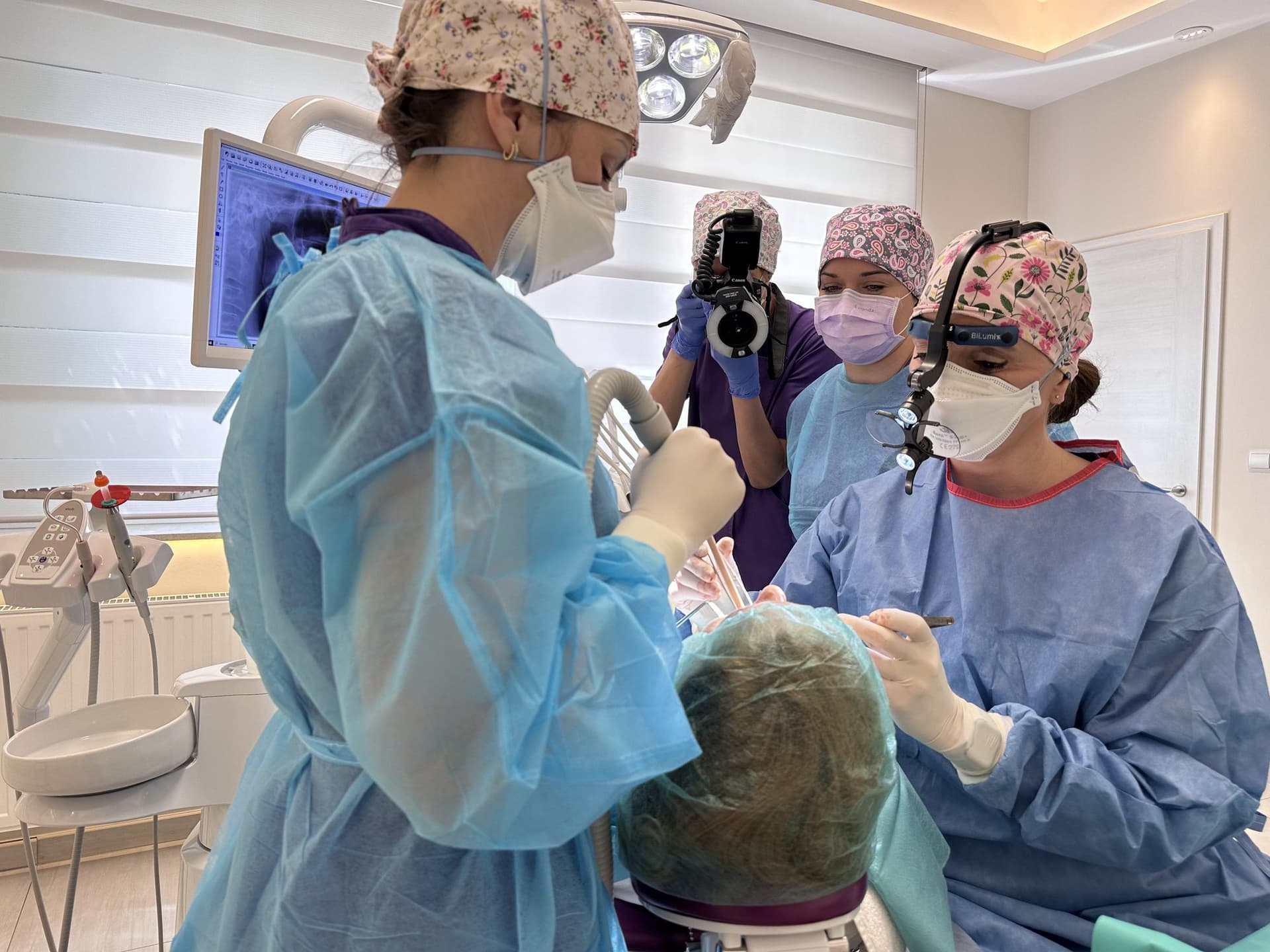
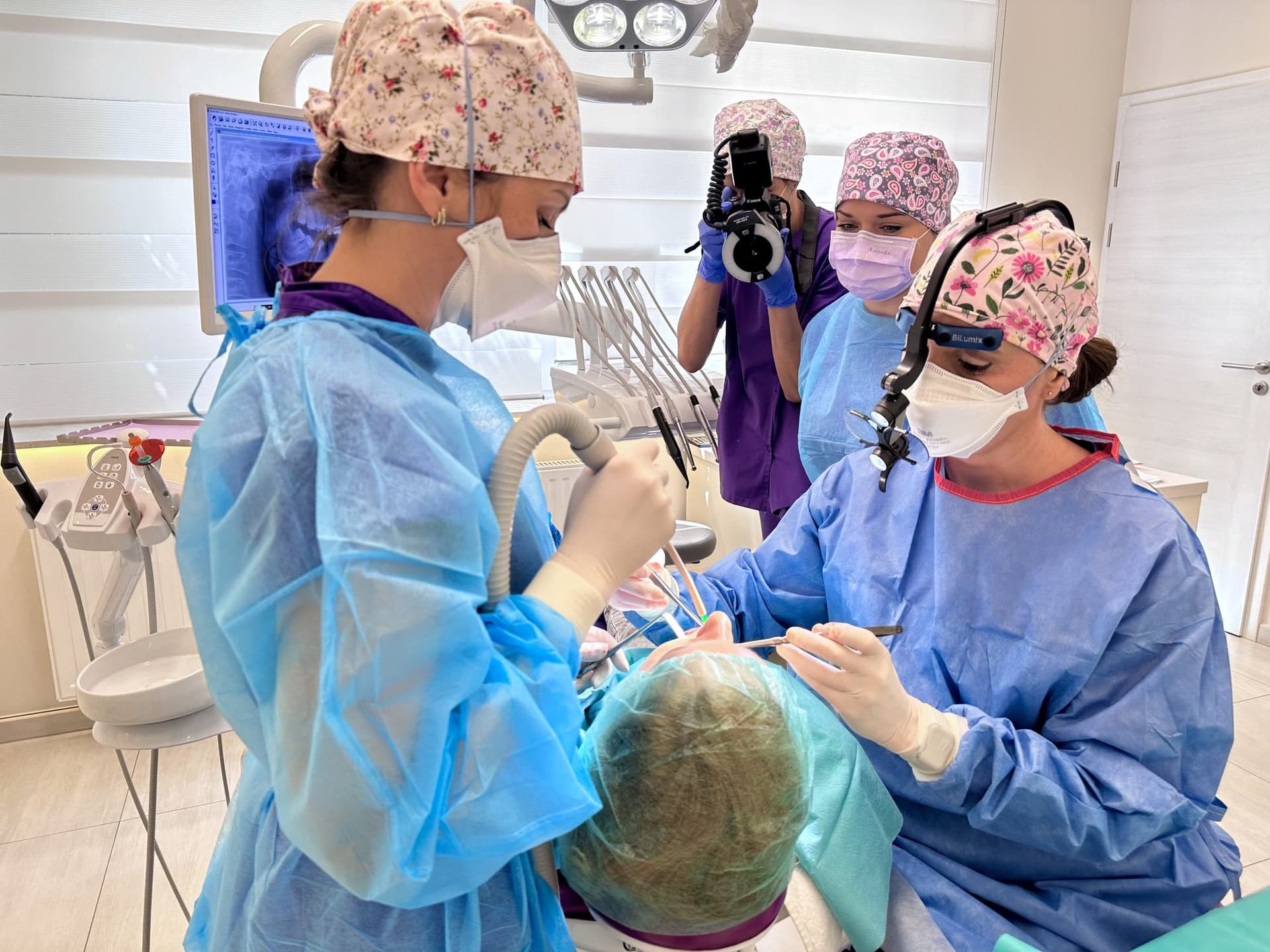
Wisdom tooth removal in our clinic takes place in an oral-surgery setting, with precise planning.
Why are wisdom teeth special?
Our wisdom teeth are relics of the distant past. In ancient times people mostly lived on raw food that required forceful chewing, so as many and as strong molars as possible and strong chewing muscles were needed. With the lifestyle of prehistoric humans, wisdom teeth were full-fledged members of the dental arch.
Civilisation, however, significantly changed our diet as well. Today we eat far more cooked, prepared food that no longer requires such grinding work. Over the course of evolution, our dentition and facial structure also adapted: the size and musculature of the jaw decreased, and wisdom teeth slowly became “superfluous”.
Wisdom teeth are also our most varied permanent teeth in form. Their shape is very diverse, the form of their roots and the course of the root canal can also be very varied — and we can encounter it in the most extreme positions in the jaw.
What do we call difficult eruption?
The most common complaints are caused by difficult eruption, i.e. the situation when the wisdom tooth gets stuck in the bone or a neighbouring tooth while growing, and its eruption stops in a non-natural position. In professional terms this is called impaction. Impacted wisdom teeth can be in various positions and can cause crowding of the other teeth, root resorption of the neighbouring tooth, periodontal inflammation, even an abscess. Inflammation around a partially gum-covered wisdom tooth can also be the starting point of a dental-origin focal disease.
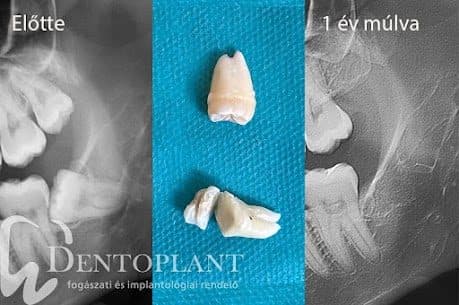
Cases — before and after
Click the images to view the condition before and after the procedure in full size.
Let's consult about your wisdom teeth
What complaints can they cause?
Gum inflammation (pericoronitis)
Pressing pain
Toothache
Decay of the wisdom tooth
Decay of the second molar
Resorption (root resorption)
Limited mouth opening
Lockjaw (trismus)
Numbness, tingling
Wisdom tooth extraction or surgical removal?
Removing wisdom teeth can be a simple extraction, but in more complicated cases it can even be a longer surgical exposure. The method of removal and the difficulty of the procedure depend on how deep the wisdom tooth to be removed lies in the jaw, in what position, and near which anatomical structures it is located.
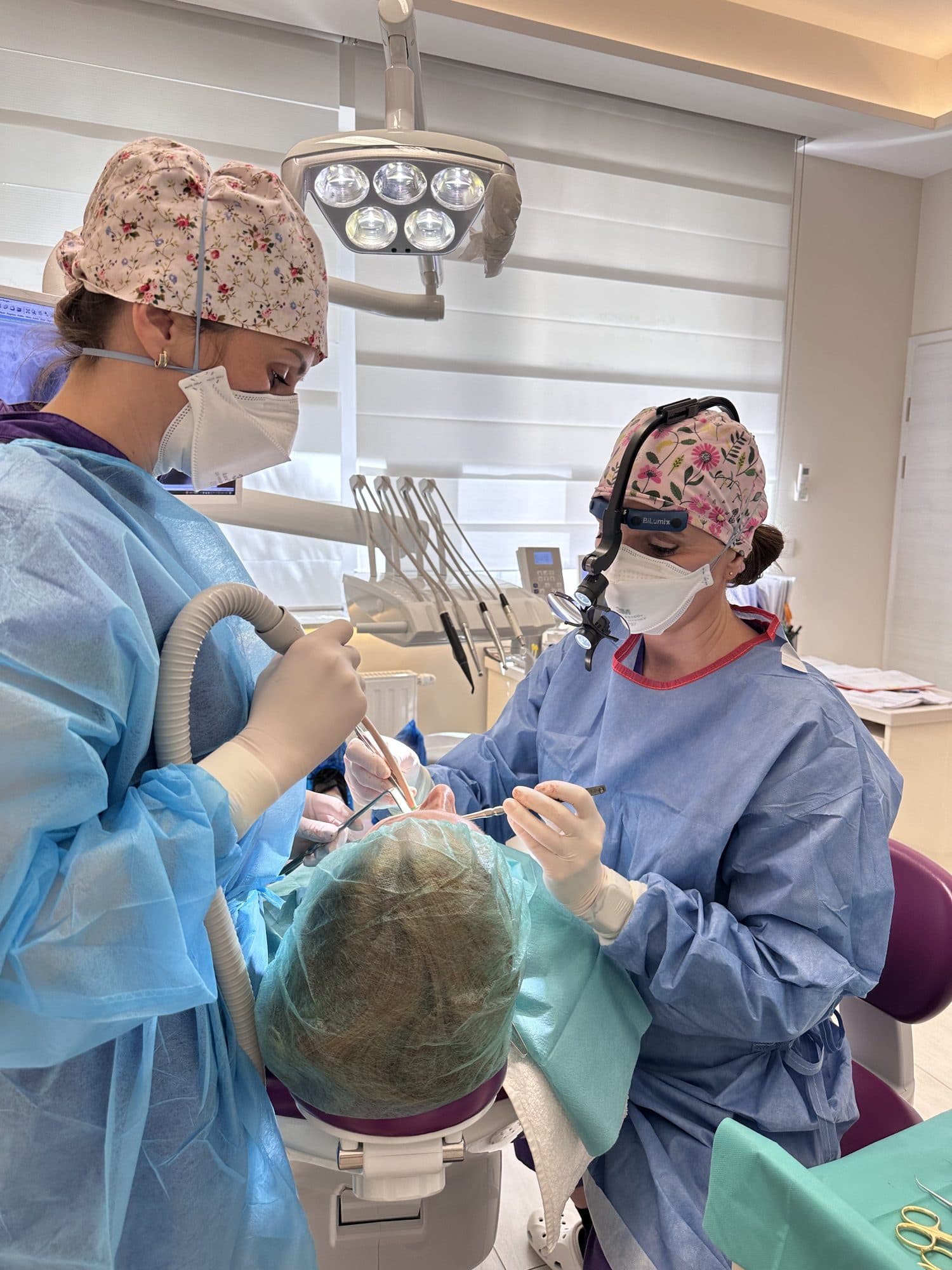
After oral surgery procedures such as wisdom tooth removal, implant placement or bone grafting, by precisely following the doctor's advice the patient can also do a lot to make the healing process faster and more comfortable. We recommend that after surgery you take care of yourself, slow down the pace — give yourself 2 days to spend resting.
When should and when should they not be removed?
Whether a wisdom tooth should be removed is decided by the oral surgeon based on the recommendations in the literature. The arguments for and against from the patient's perspective must always be weighed.
It must be removed if:
- It causes inflammation and there is no hope of normal eruption
- The patient cannot clean it properly
- It is very decayed
- It is the starting point of a cyst or tumour
- It is necessary for achieving the proper result when planning orthodontic treatment
We do not remove it if:
- It fits in the dental arch, the patient can clean it, and there is an opposing wisdom tooth participating in chewing
- It is symptom-free and located in a surgically critical position
3-dimensional CBCT diagnostics
In planning the surgical removal of a wisdom tooth, it is an indispensable help that in our clinic we can evaluate the exact anatomical situation on a 3-dimensional CT scan.
For the radiological examination of wisdom teeth, traditional panoramic X-rays do not provide enough data. When we identify suspicious, warning signs on the OPG X-ray, only a 3D CBCT examination can clarify the exact anatomy of the tooth. There are 90-degree curved root positions, roots surrounding the nerve, or roots protruding into the maxillary sinus and the nerve canal of the lower jaw — in assessing these, even an experienced specialist can only make the right decision by evaluating the 3-dimensional scan.
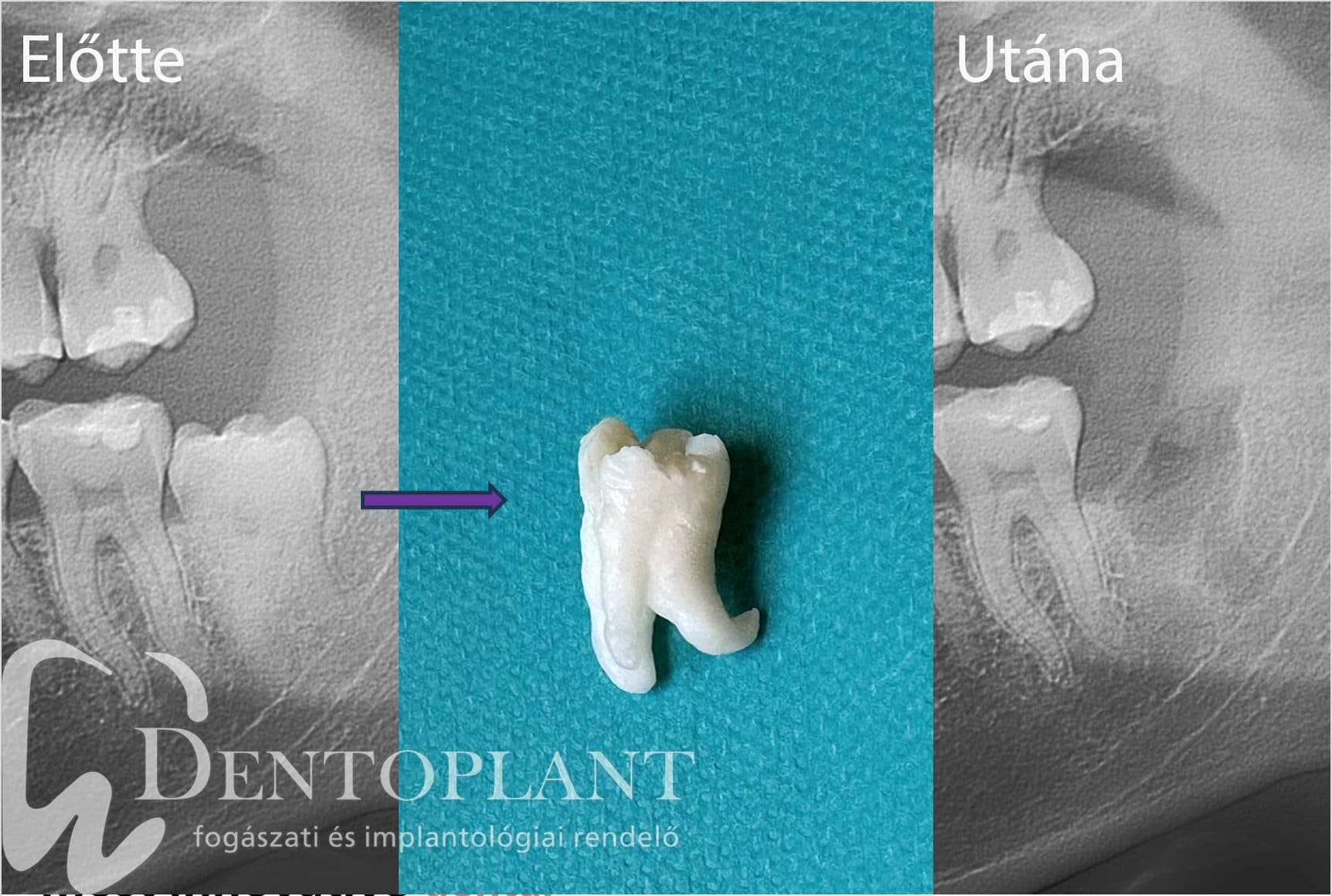
Horizontally impacted wisdom tooth
Starting condition and the situation after removal, on a single image.
That lucky 20%
According to a 2020 study at the University of Bern, in 20% of the European population someone is missing at least one wisdom tooth. And among those who also had a congenital absence of other teeth, the congenital absence of the wisdom tooth was also present in 50% of cases.
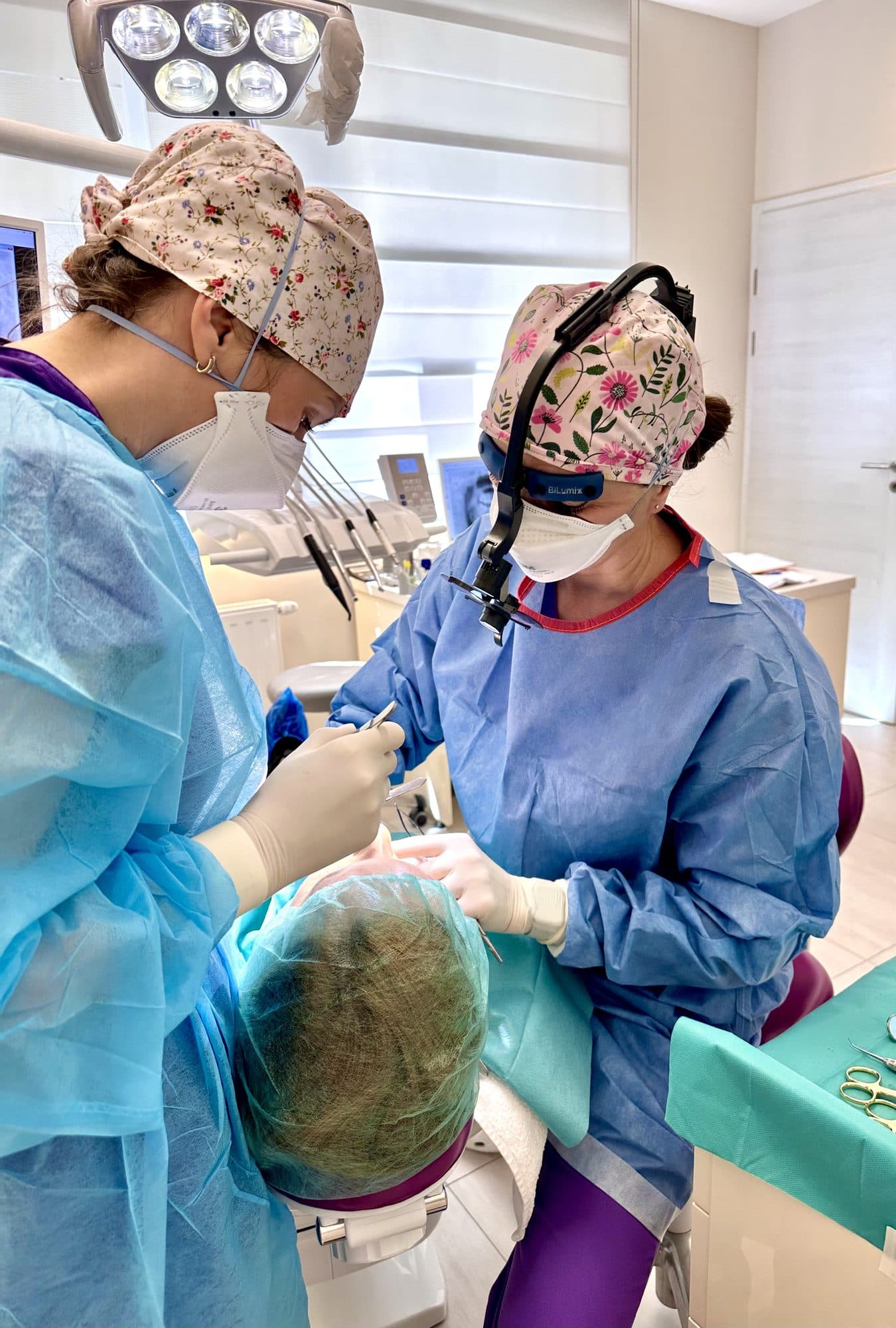
A personal consultation on the question of assessing wisdom tooth removal helps to find the personalised treatment solution that is most comfortable for you.