
Digital Smile Design
At the Dentoplant Dental Clinic we create restorations for the front teeth and complete oral reconstructions following the modern principles of aesthetic dentistry, using Digital Smile Design (DSD).
With the help of standardised photo documentation taken of the starting condition, and then intraoral scanning, we can display our cases on a computer in such a comprehensive way that it significantly improves the resulting functional and aesthetic outcomes. A key advantage of smile design is that we can show the patient the expected outcome of the treatment in advance, so they can see their future smile. We always begin the planning by analysing the existing smile, considering which changes would be beneficial to make the patient's vision a reality.
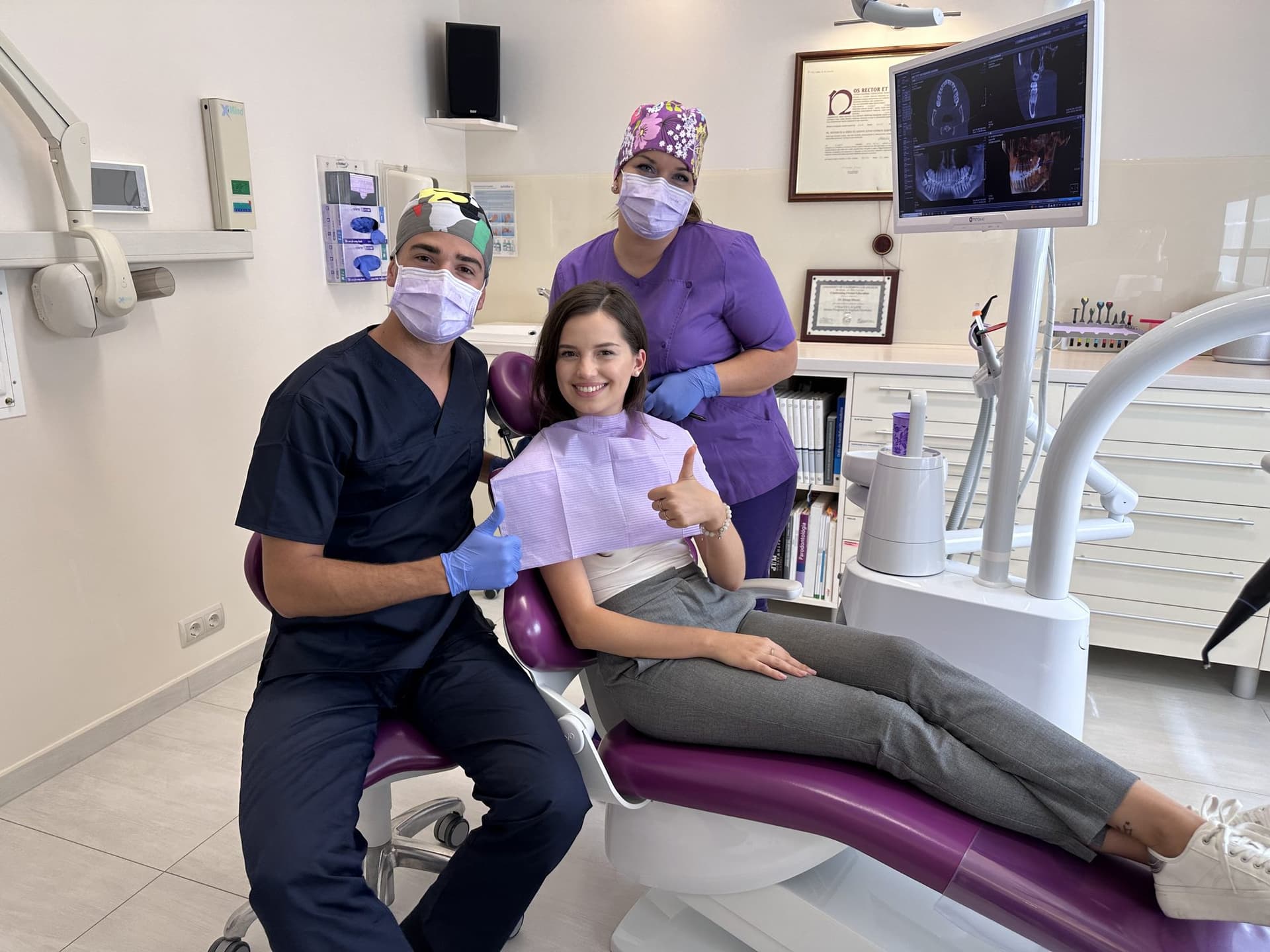
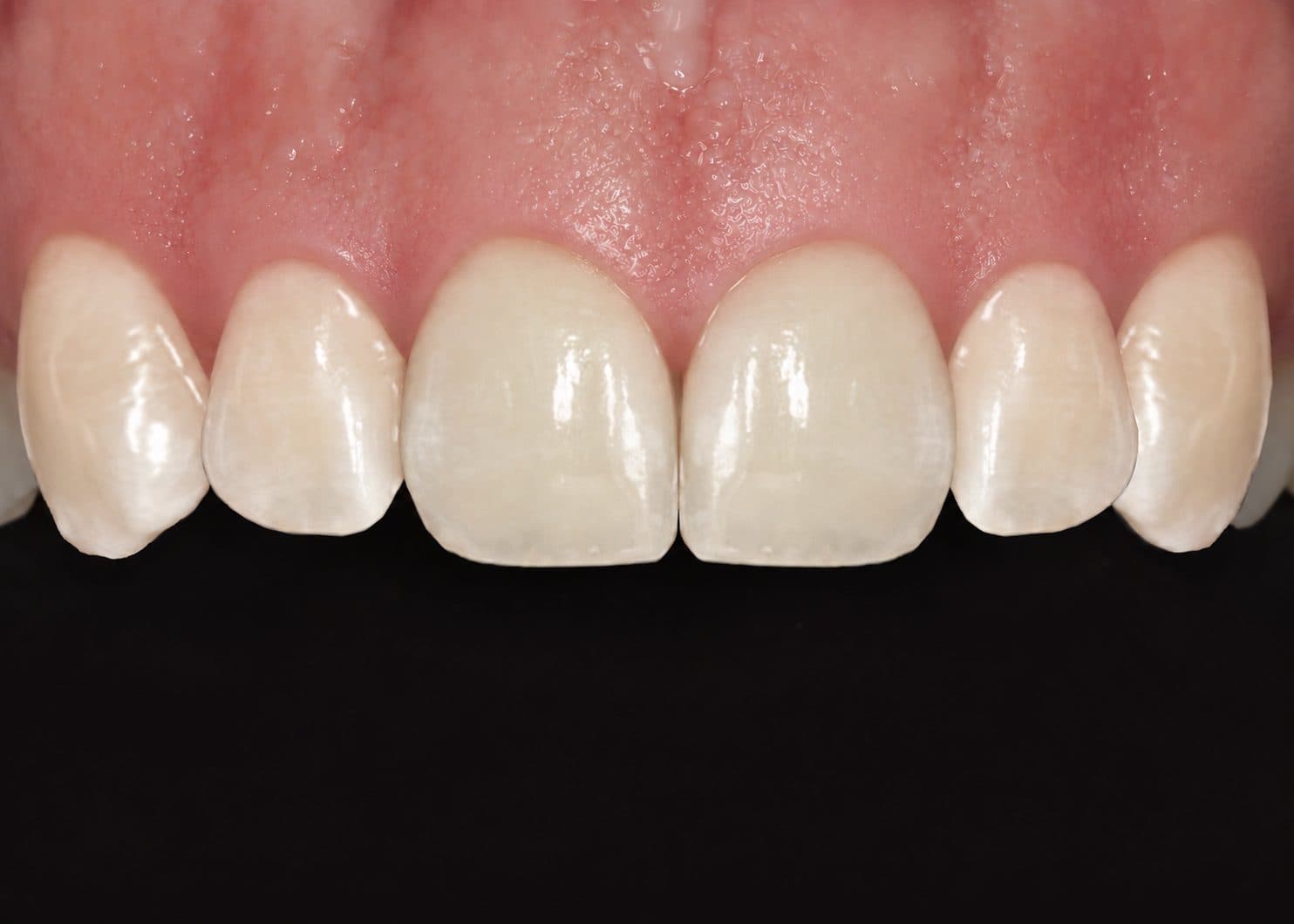
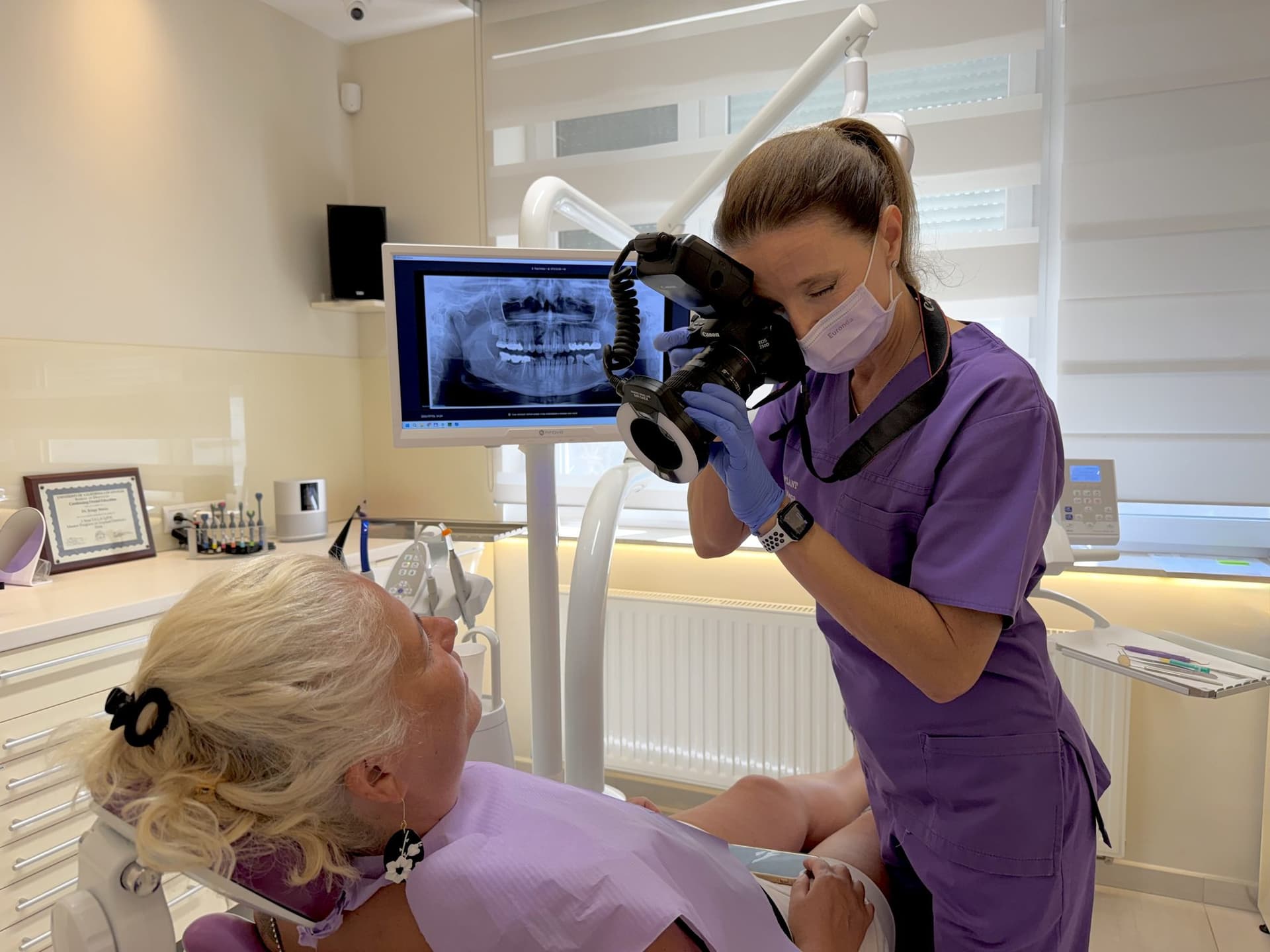
Planning starts with photo documentation and intraoral scanning — in the clinic, together with the patient.
What exactly is DSD?
With Digital Smile Design (DSD) we are able to visualise the expected aesthetic result at the very beginning of the treatment, without having carried it out in reality, so the patient takes no risk whatsoever.
When planning and carrying out dental treatments, we must consider numerous health, functional, structural or comfort aspects to achieve a perfect result. Naturally, aesthetic craftsmanship, colour matching and lifelike execution are basic requirements for every restoration. However, the patient's features beyond the oral cavity must not be ignored either. Even the most beautiful restoration fails to reach its goal if it does not fit the patient's facial character, proportions and tones.
This is why the personalised, aesthetic smile is designed together with the treating dentist using dedicated dental design software. As a result, individually feasible reconstructions that suit the patient's facial type and soft tissues appear as solution options. From chipped, gapped or discoloured teeth we can conjure up beautiful teeth on the screen within minutes, suited to the facial type and soft tissues. Beyond feasibility, taking individual facial harmony into account, only plans that can actually be realised are created.
See how we design your smile
With Digital Smile Design, a unique and personal smile plan is created for you! During the computer-aided planning we can show which aesthetic changes would be beneficial to make your smile flawless. Book an appointment for a consultation!
Book an appointment for Digital Smile Design!
What are the steps of Digital Smile Design?
Digital Smile Design is a simple and enjoyable collaboration with your dentist. Before the design, a detailed consultation takes place: we record your medical history, examine you, take a panoramic X-ray and an intraoral scan, and discuss your ideas about the new smile. After this, the process can begin:
- 01
Photo documentation
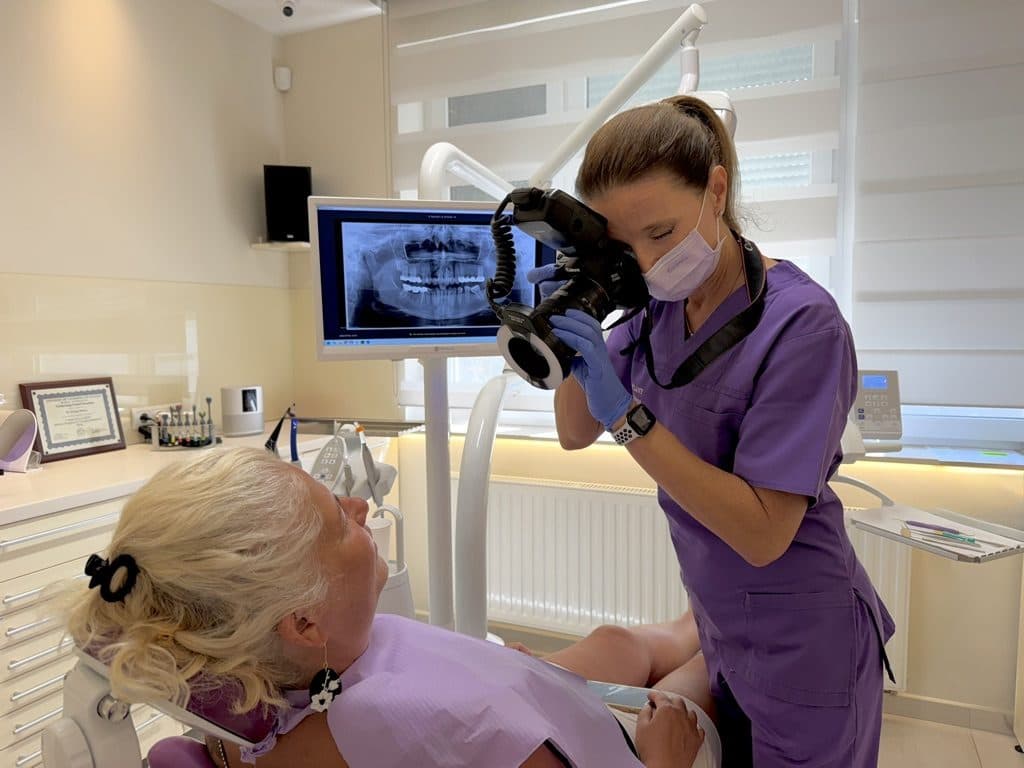
We take a series of high-resolution digital images (intraoral/tooth photos and extraoral/portraits) to gain accurate knowledge of the proportions of the face and teeth. This lets us assess the positional relationship of the teeth, gums, lips and face, as well as facial expressions of different emotions. - 02
Importing into the software
The photos and analyses are transferred into the DSD program and become visible on screen. During the demonstration, only the options that are feasible from a professional dental standpoint are shown, so no unrealistic plans are made, only ones that are tailored to the patient. - 03
Digital smile analysis
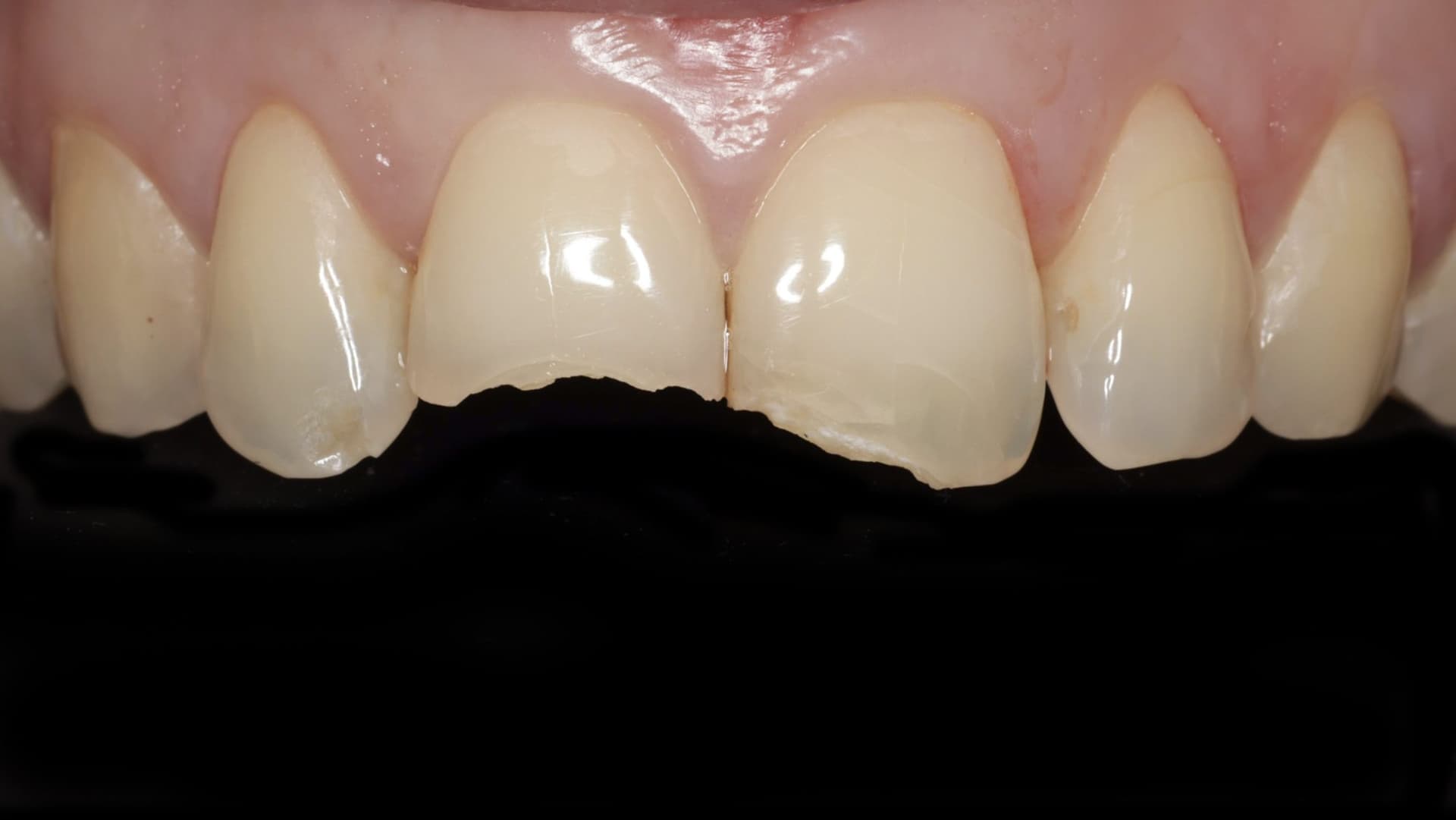
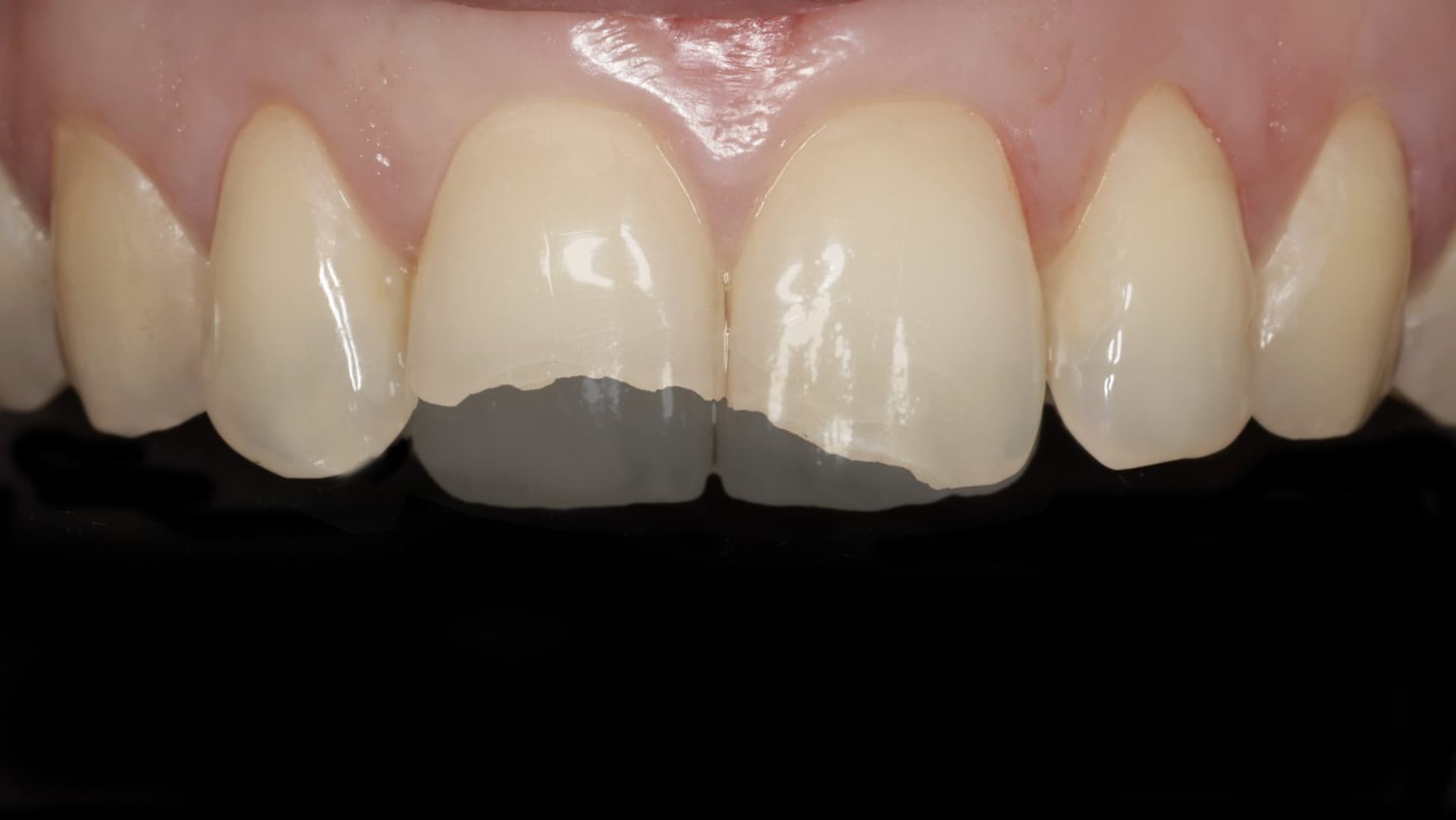
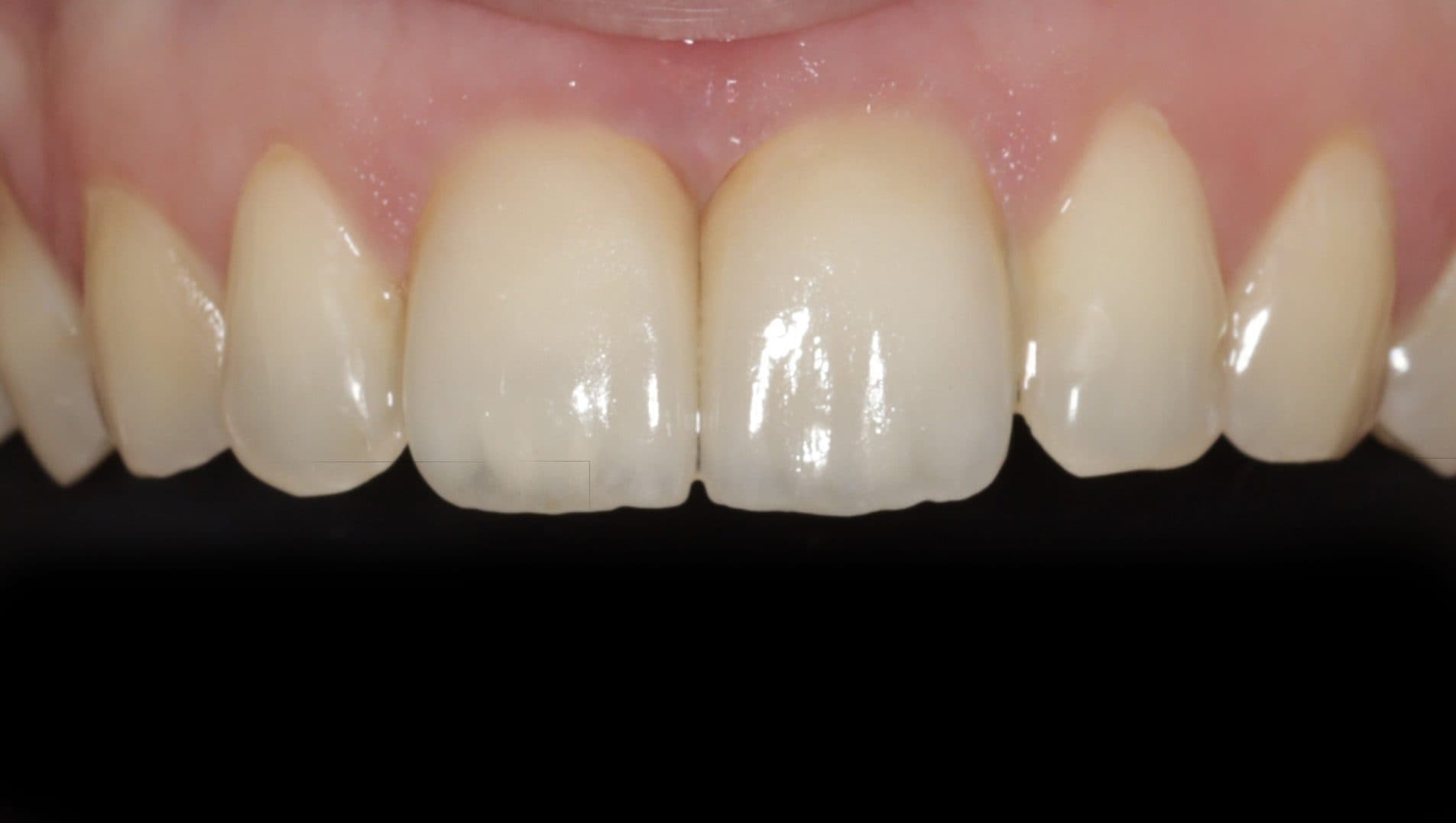
Based on the photos and intraoral scan data, we display the current, initial condition and review it together with the patient. The smile analysis is essentially a detailed consultation, during which we analyse the symmetry, the position of the lips and teeth, and review which modifications would be beneficial for the patient. We listen to the patient's expectations of the treatment and exactly what they would like to change.
- 04
Digital design
After defining the initial starting situation, the dentist develops a proposal on the computer that appears as a possible variant of the existing situation. From now on the colour, shape and design can be changed until we find the desired solution. Then, based on the design data, a prototype can be created in the laboratory. With a 3D printer, the dental technician can print the envisioned plan (printing the full arch) or create a mock-up (temporary restoration) based on the selected, designed smile, which can be tested in the dental office by placing it on the teeth before any intervention takes place! - 05
Mock-up – placing prototype temporary crowns
Next, the dentist demonstrates the prototype obtained from the model in the mouth using temporary plastic. The patient can then try out an exact copy of the digital plan while speaking and smiling, and if needed, corrections can be made. Live, on the spot, it is possible to modify, remove from or add to the temporary prototype, so individual changes can be tried out on a temporary basis. - 06
Preparing the teeth, creating the final restoration
Then photo documentation and a presentation are made, and once the patient approves the plan, preparation of the teeth for the final restoration begins. The dental laboratory creates an exact copy of the digital plan in ceramic, which the dentist precisely bonds to the patient's teeth, and this is how the new, aesthetic and functionally satisfying, long-desired smile becomes reality. - 07
Documentation
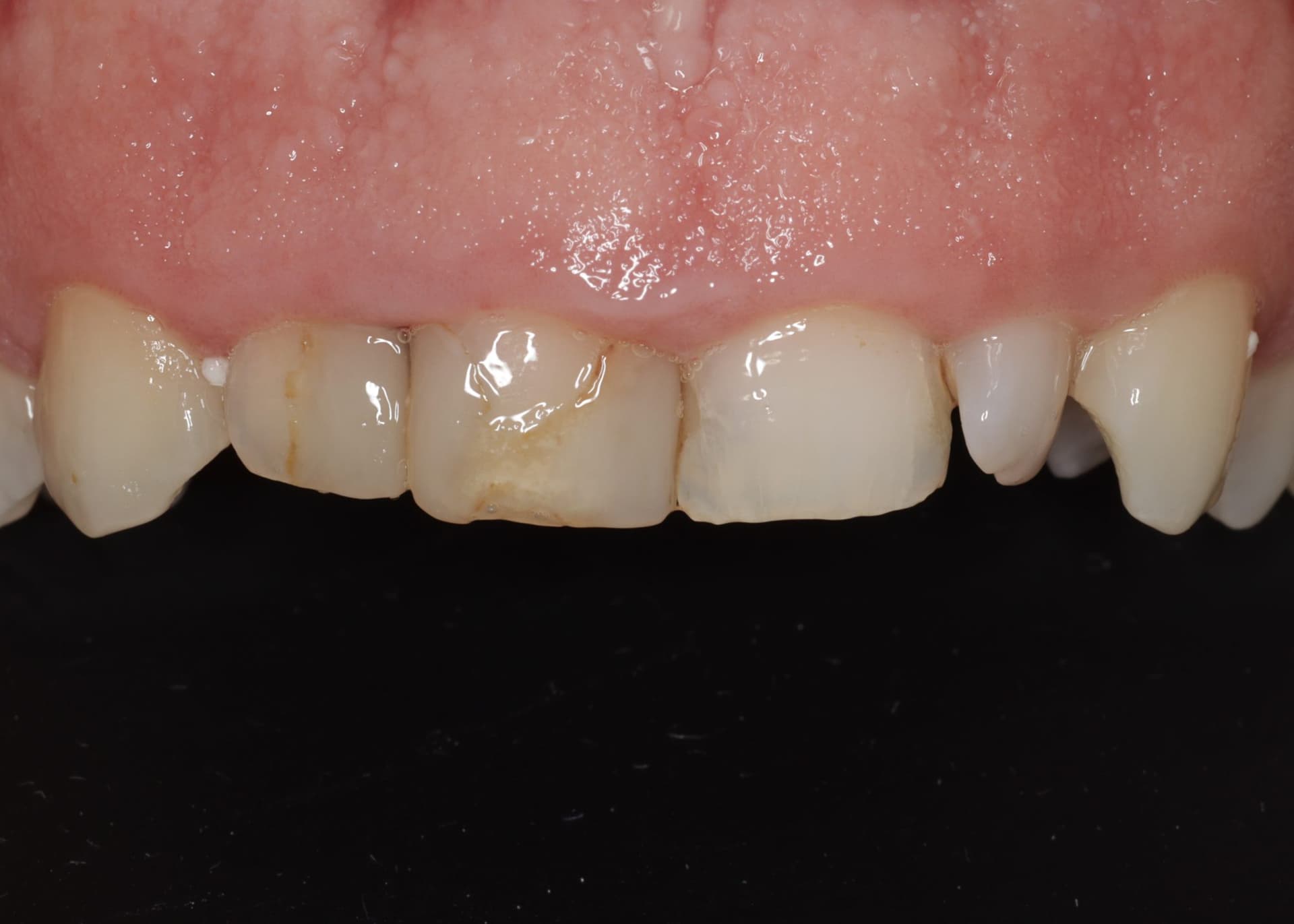
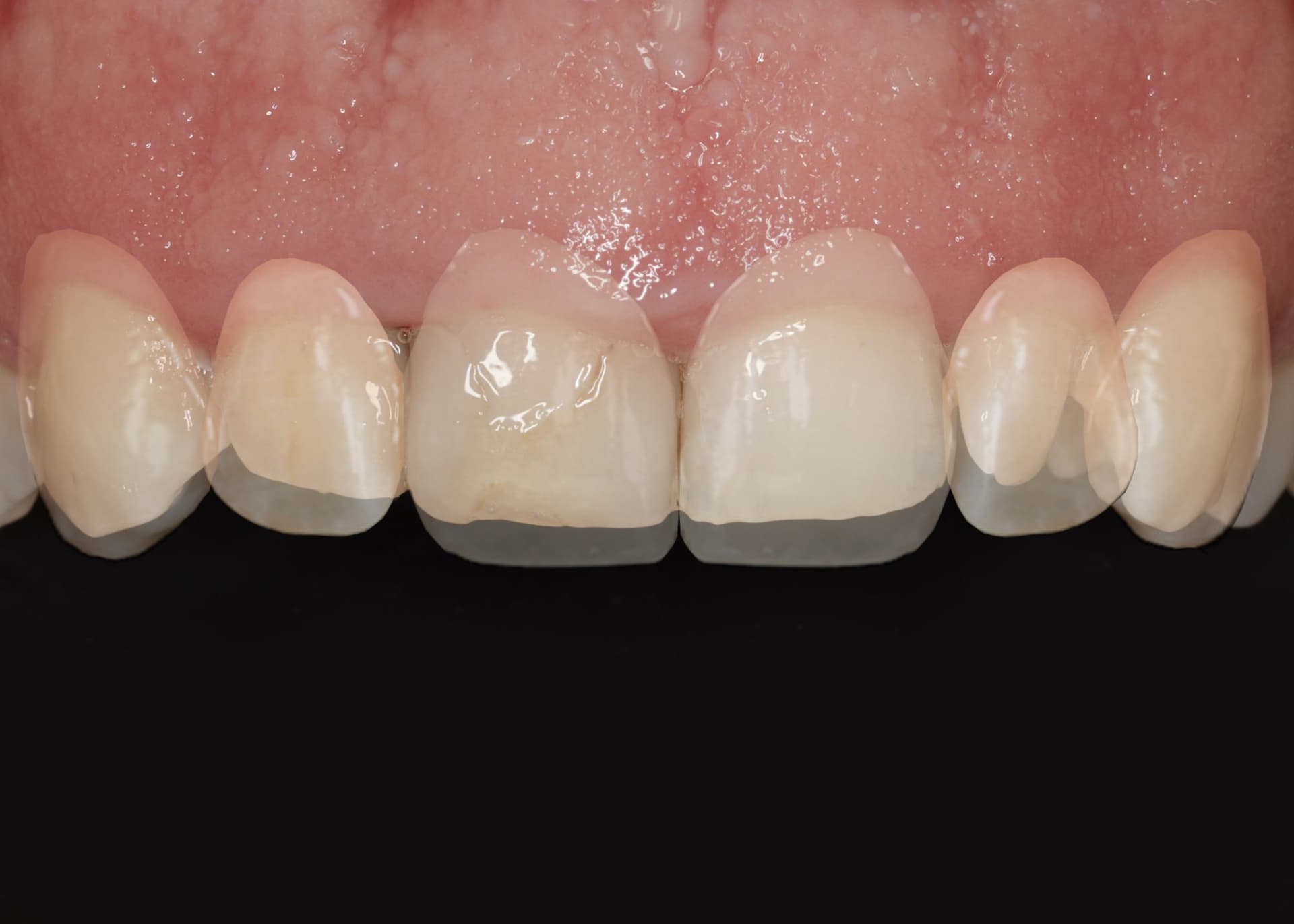
At the end of the treatment, photo documentation is taken again, with which we compare the starting condition to the result and present it to the patient, so their only task is to enjoy their beautiful, new smile.
What is scanning?
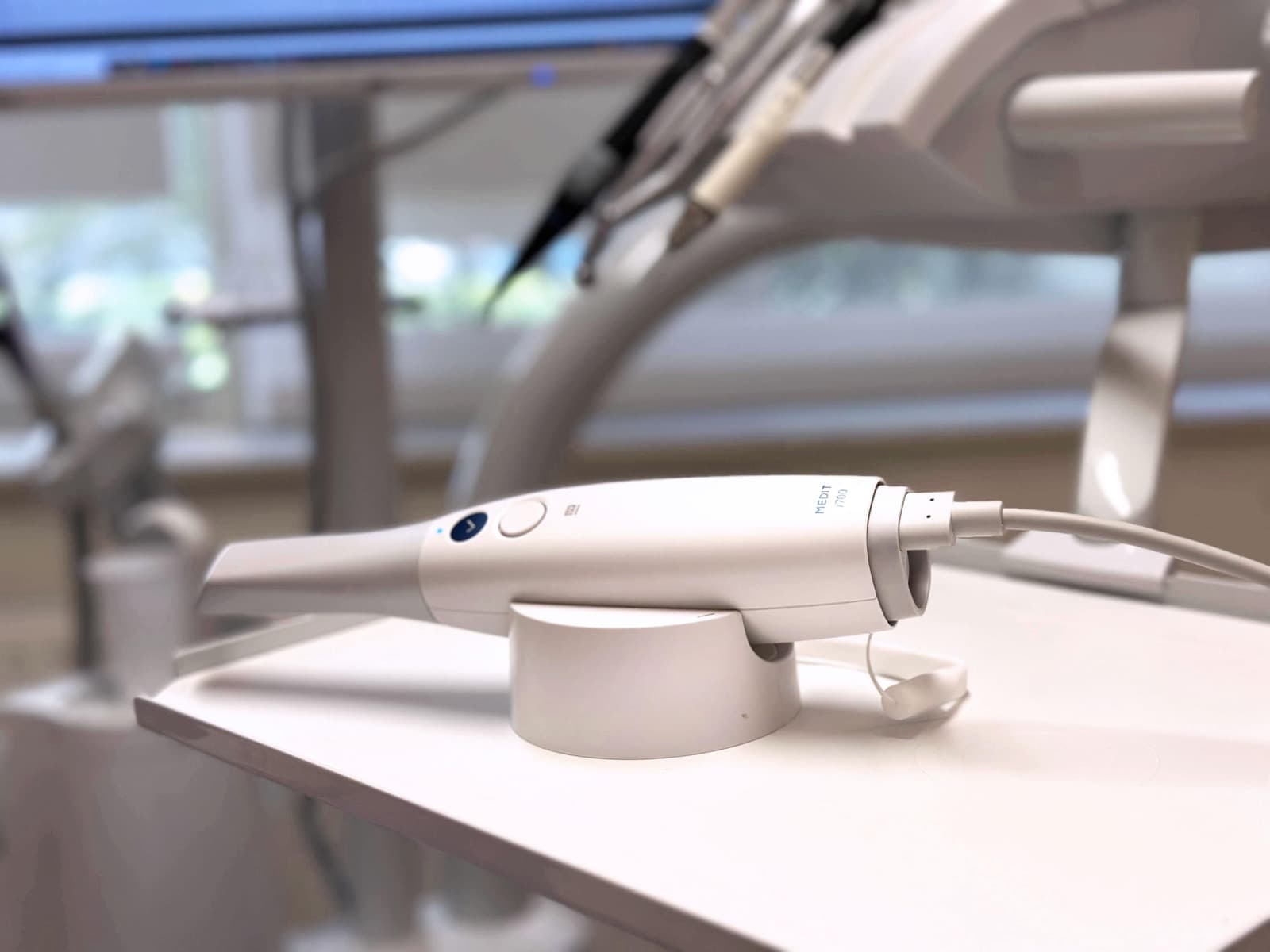
At the Dentoplant Dental and Implantology Clinic, some restorations are already made without taking impressions, using a fully digital workflow. Instead of an impression we perform optical imaging, i.e. scanning, and send the file digitally to the dental laboratory. We perform the digital scanning with a very modern and fast Medit i700 scanner, which allows us to capture not only crowns and bridges but also the starting condition and the original bite.
What is digital smile recording and the tooth map?
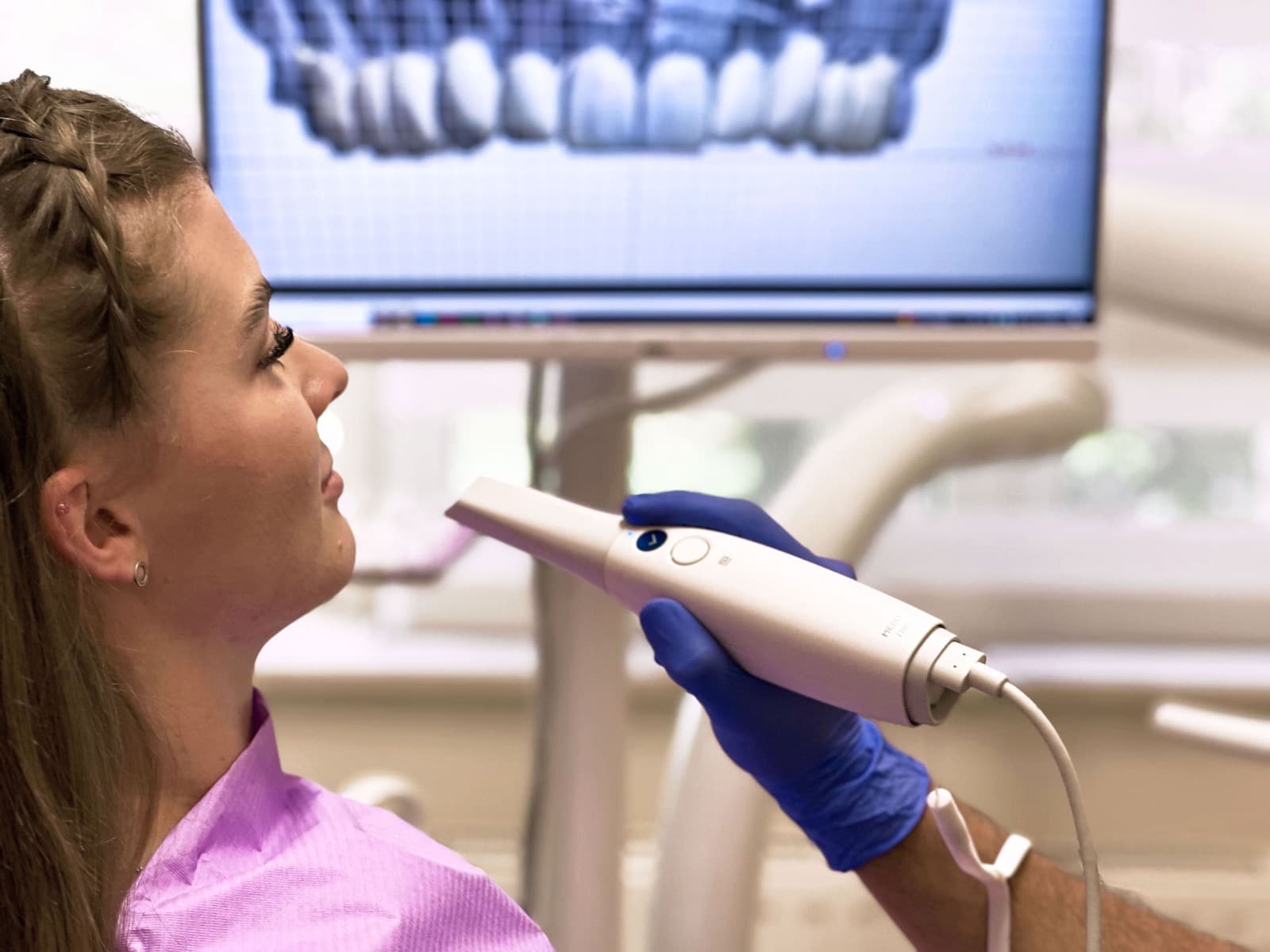
With the Medit i700 scanner, the starting situation can be preserved and you can ensure the longevity of your smile — smile recording is an excellent option for this. After scanning, we digitise the model of the dentition in 3D down to the last tiny detail, which can be retrieved from the archive at any time in the future. It is worth performing smile recording as early as possible, while your teeth are intact and aesthetically ideal. If you have a digitised tooth map, it can be reconstructed with great precision in the event of any future tooth injury.
What do we call digital retrieval?
Because the starting situation was stored in the program's archive at an earlier point in time, it can be retrieved and recalled as a 3D model at any moment. In the event of a tooth injury or restoration, the dental laboratory can use the stored shape and tooth colour to create a solution in a restoration that is as close as possible to the original. This provides security for both the patient and the treating dentist.
What are the benefits of Digital Smile Design?
The perspectives of smile design software reach much further than one might think. This is not a simple digital drawing program but a dental tool fully equipped with the means of realisation. This means it does not create a result that cannot be achieved for the patient. It only produces an image that is feasible for the individual parameters from both a professional dental and dental-technician standpoint. This great advantage made the program unique and extremely useful.
One huge advantage of smile design is that patients see the expected result of the treatment in advance, so they know what to expect. But it brings far more benefits for the dentist, since it facilitates communication between the dentist and the dental technician. This eliminates the possibility of misunderstanding.
It also greatly eases the dental technician's work when, for the diagnosis and the plan, they receive exact parameters and precise measurements through smile design, since this makes the expected result completely clear. The photos created with the software show the patient's expectations in their full reality, which can be much more accurate than any description.
A further benefit is that costs can be controlled: based on the treatment plan they can be adjusted and scheduled to fit the patient's means.
Who do we recommend Digital Smile Design for?
- Every patient about to begin a restoration in the aesthetic zone
- Complex cases where both the lower and upper dental arch are treated
- Those who have decided on a smaller or larger change but do not dare to take the plunge
- Those who are dissatisfied with the look of their teeth but fear an uncertain result
- Patients who want to know exactly how the treatment will change their appearance
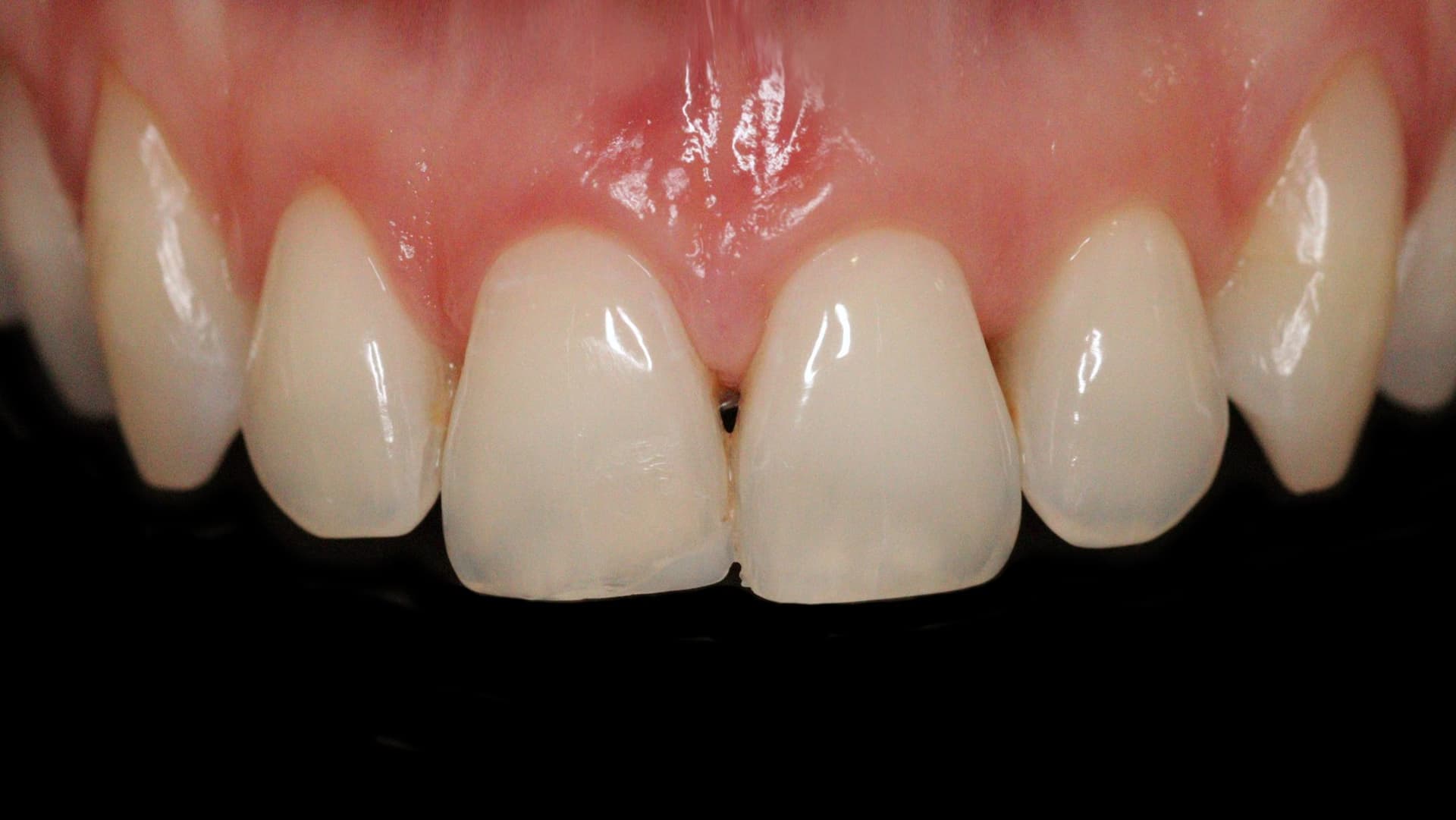
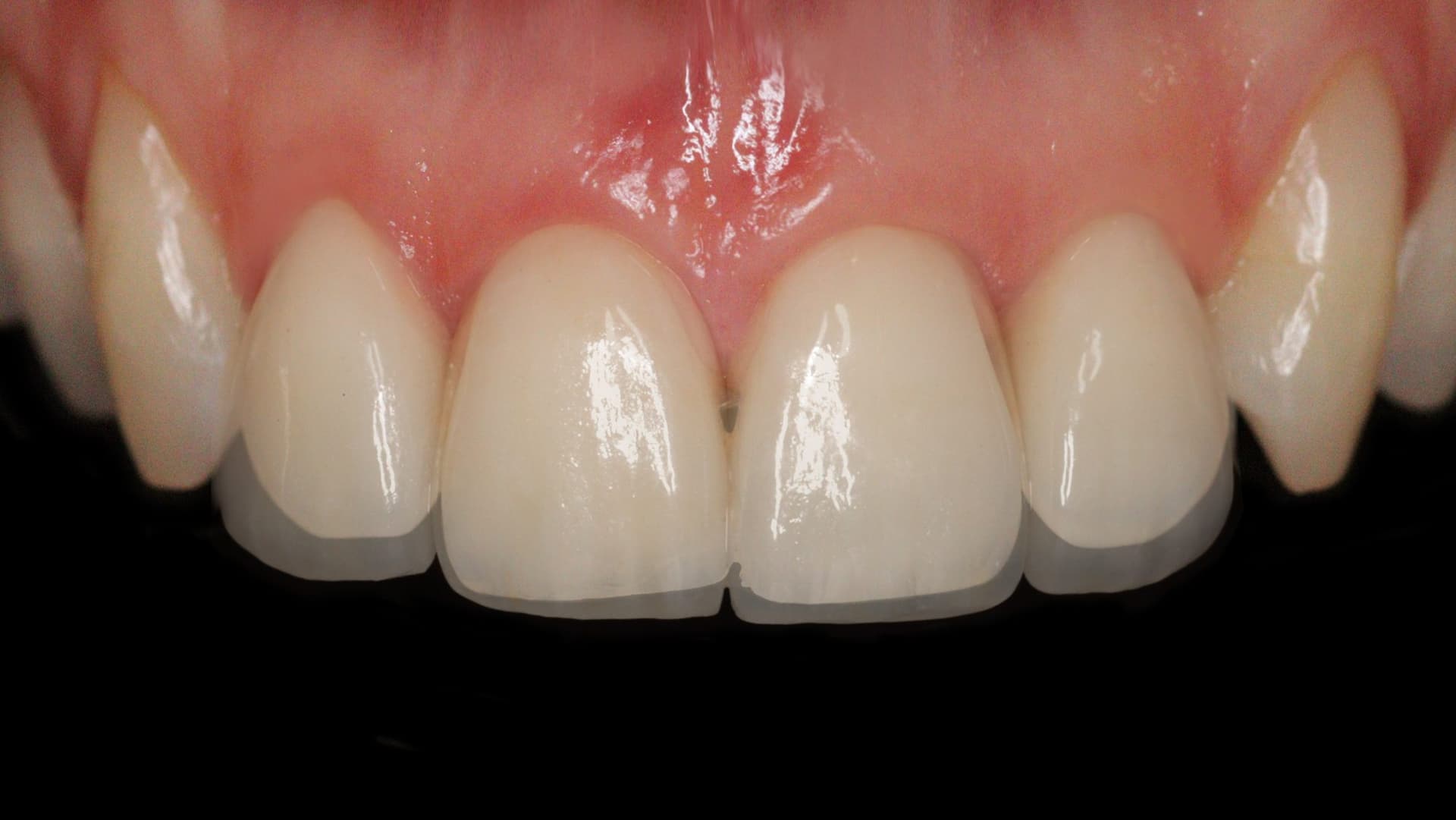
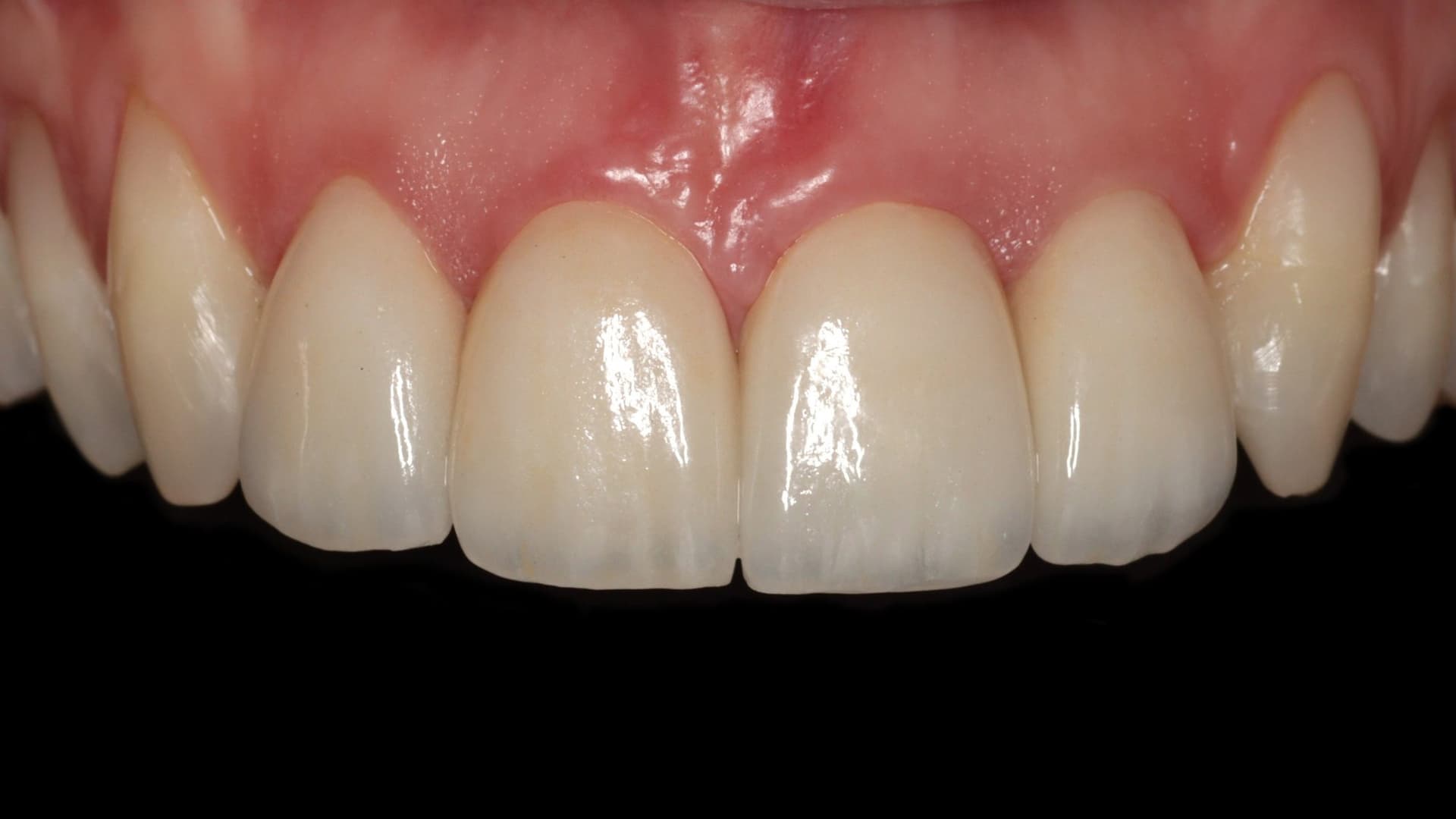
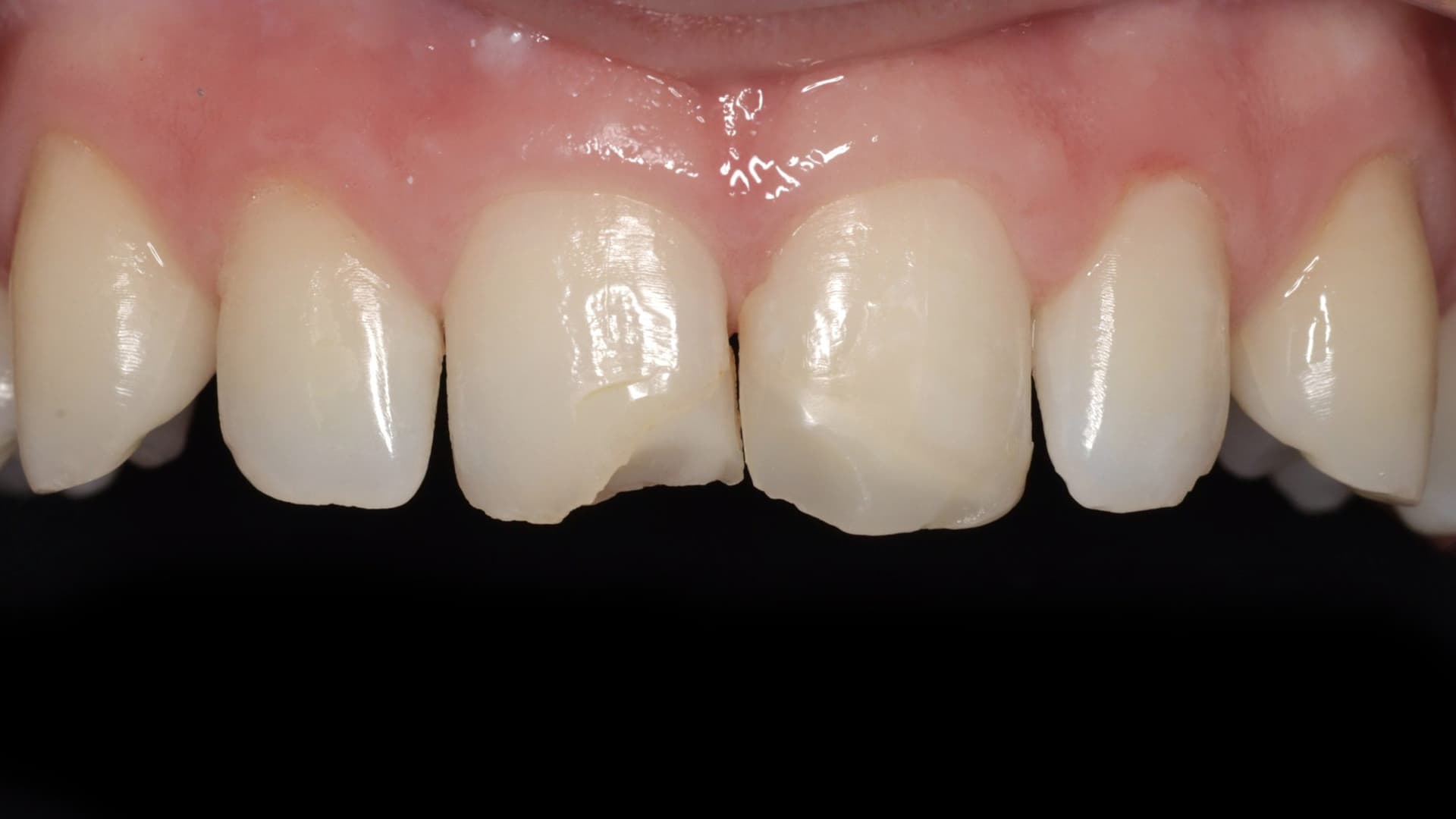
Cases
Replacement of missing lateral incisors
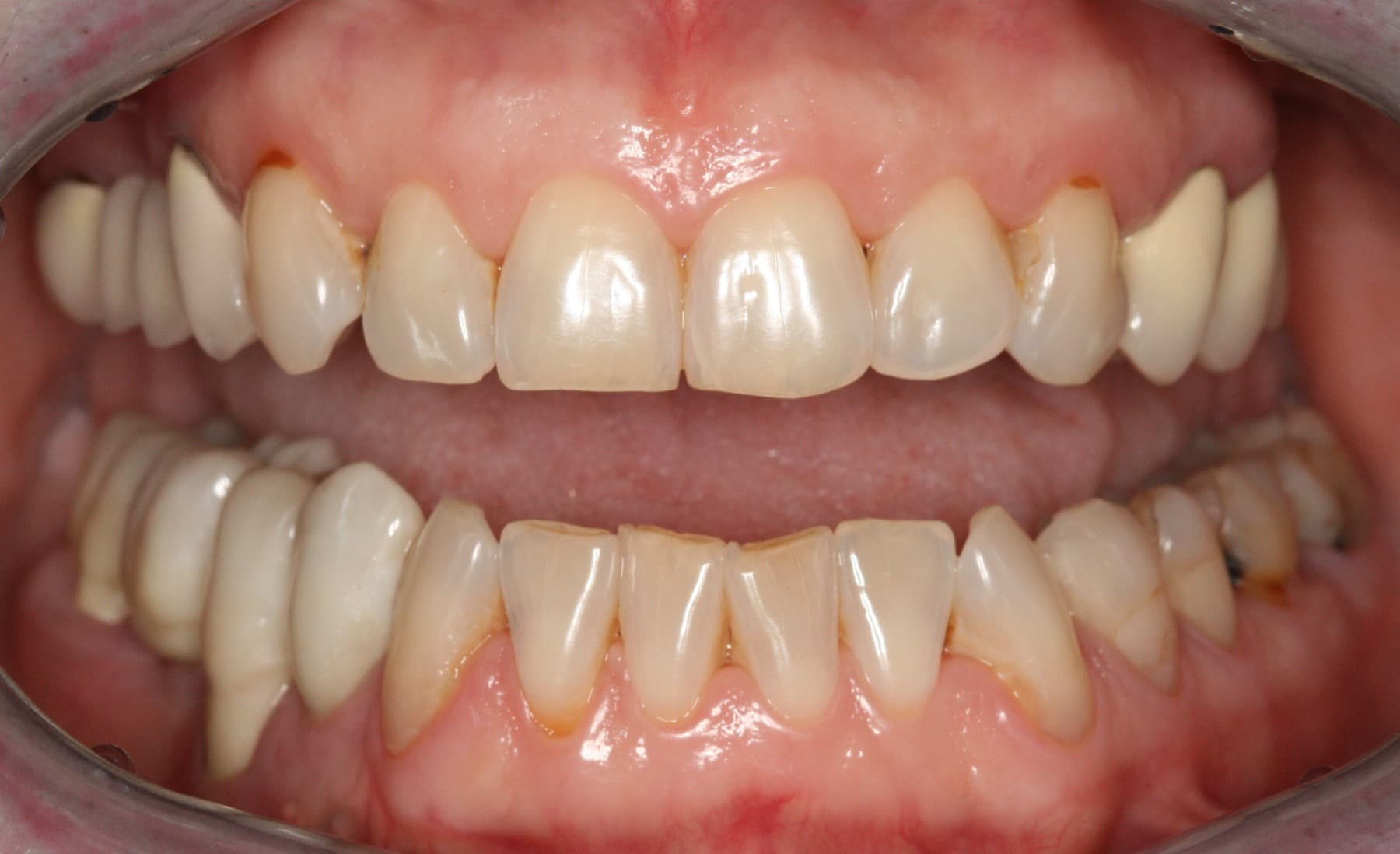
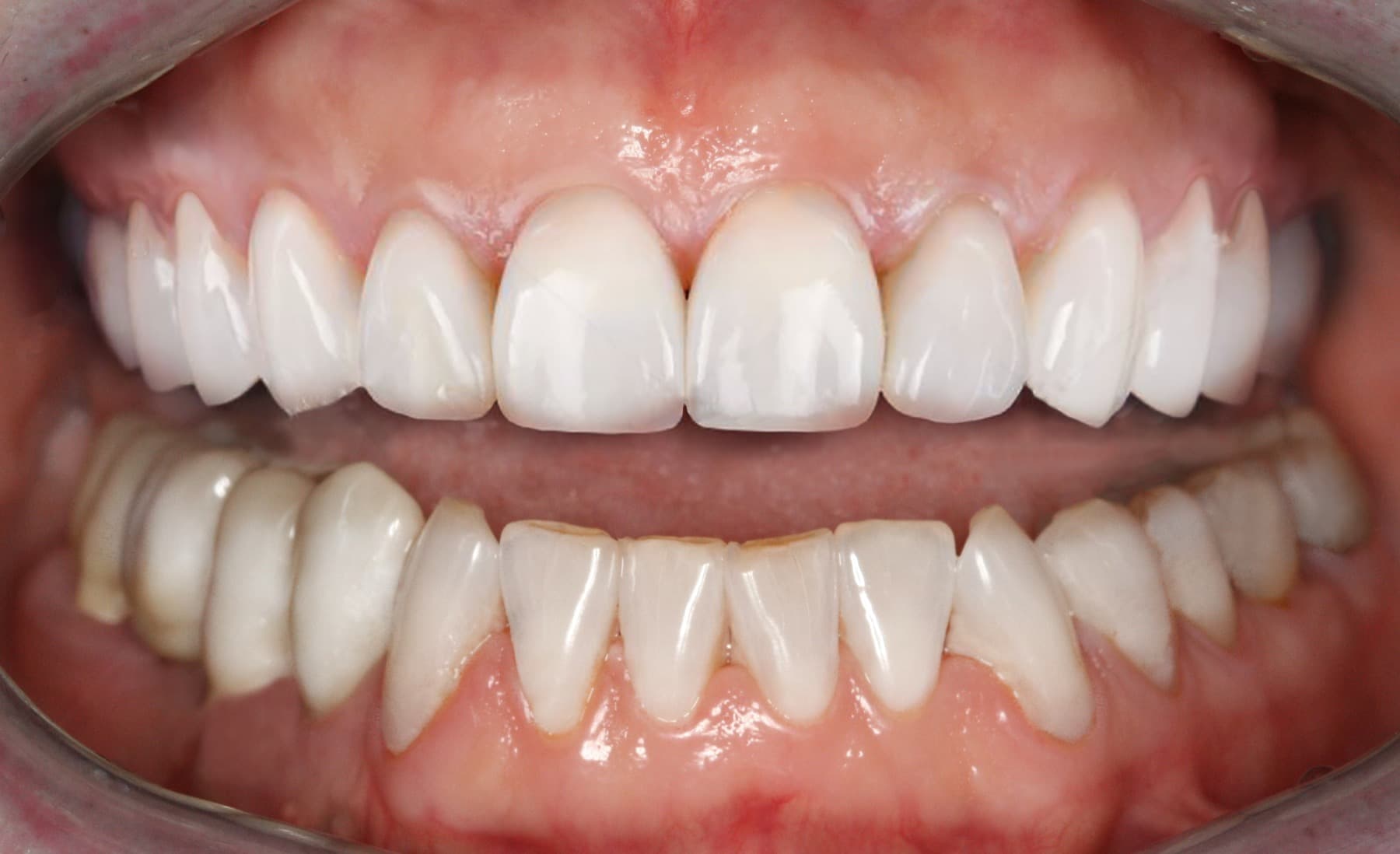
Reconstruction of the upper front teeth
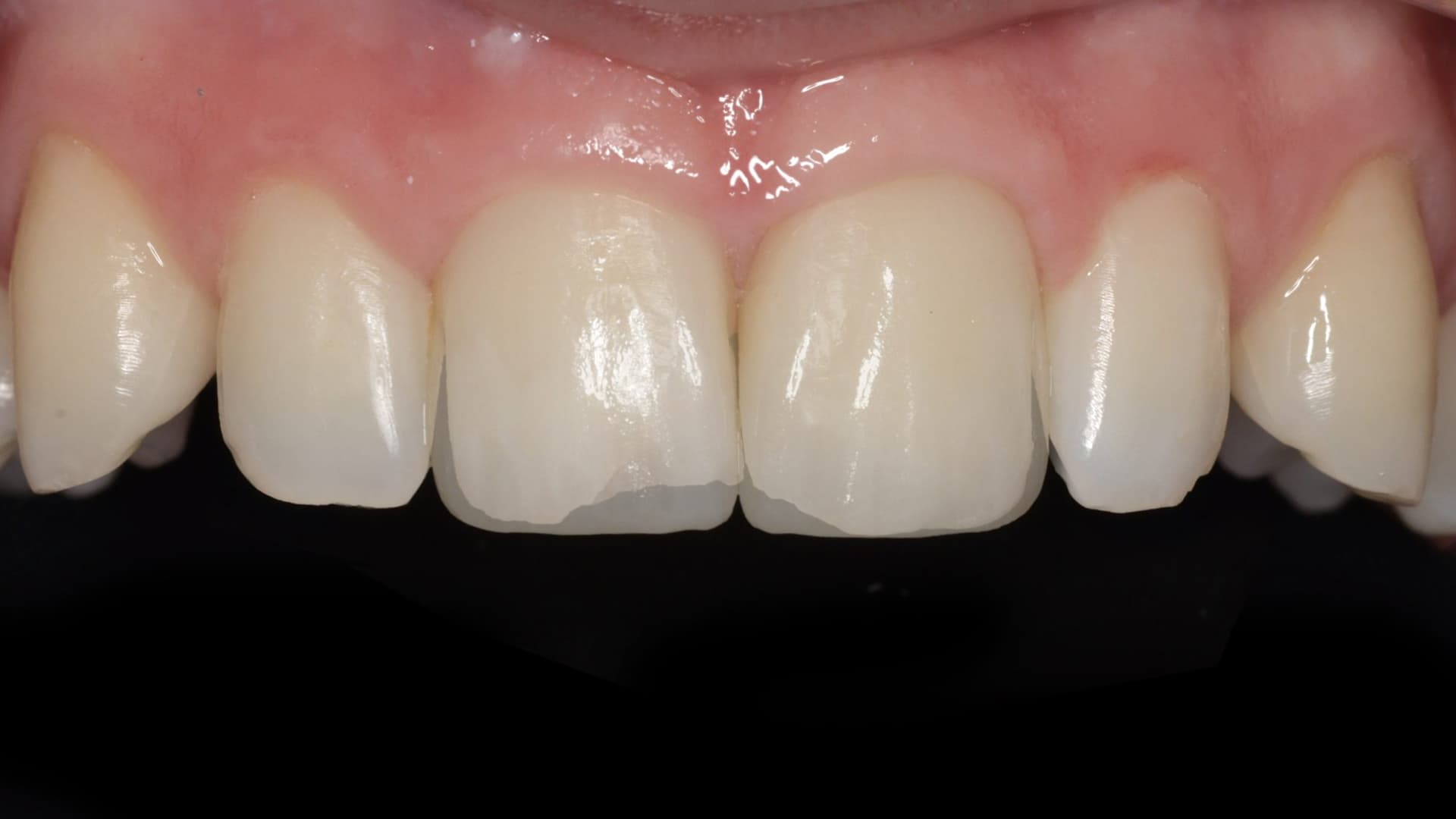
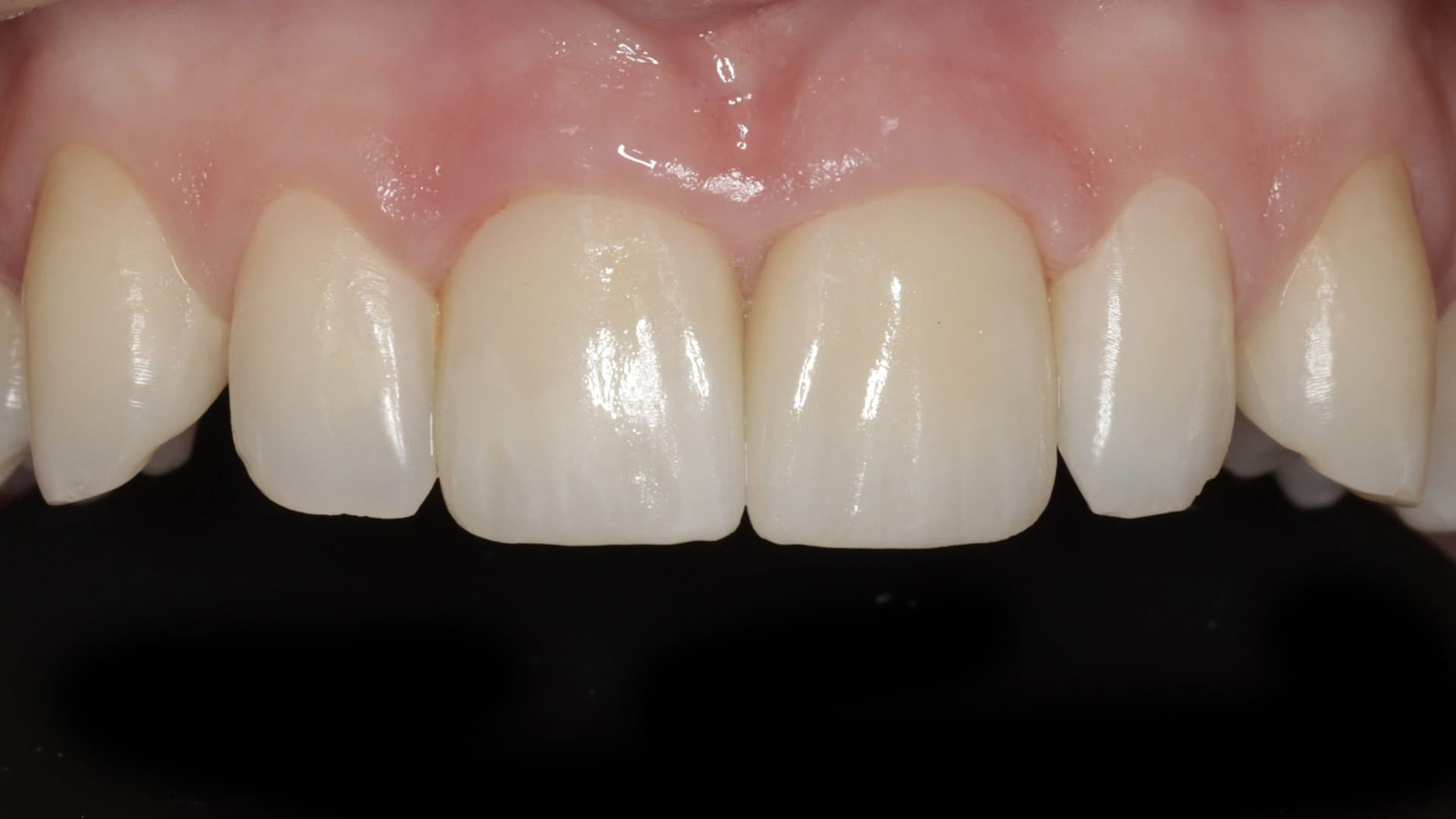
Before–after transitions
The image pairs below slowly fade from the starting condition to the finished smile.